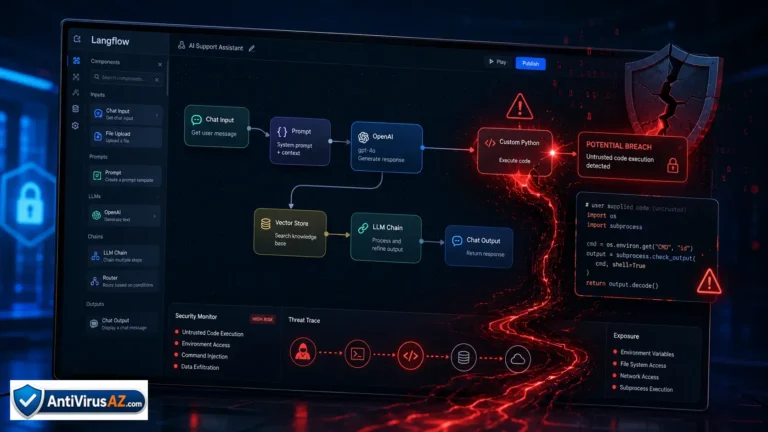
AI-Driven Malware: The Present and Future of Cyber Threats
The integration of artificial intelligence (AI) into cybersecurity has created significant advancements in the defense against cyber threats. However, as AI continues to evolve, so too do the tactics of cybercriminals who are now leveraging this powerful technology to create more sophisticated forms of malware. AI-driven malware is rapidly becoming a major concern for individuals, businesses, and governments around the world. This article explores the present state of AI-driven malware, its potential future developments, and strategies to protect against this emerging threat.
The Present State of AI-Driven Malware
The present state of AI-driven malware represents a growing and concerning trend in cybersecurity. As artificial intelligence (AI) technologies advance, cybercriminals are increasingly leveraging these capabilities to enhance the sophistication, adaptability, and stealth of malicious software. AI-driven malware can learn from its environment, autonomously modify its attack vectors, and evade traditional detection methods, making it significantly more dangerous than conventional malware.
One of the key innovations in AI-powered malware is its ability to mimic legitimate user behavior, blending into normal network traffic to avoid detection by rule-based security systems. It can also adapt in real-time to the defenses deployed by its target, rendering static cybersecurity solutions less effective. Moreover, AI algorithms enable malware to exploit vulnerabilities faster and more efficiently, scaling attacks with unprecedented precision.
For cybersecurity professionals, combating AI-driven malware poses new challenges. Traditional defenses like firewalls, antivirus programs, and intrusion detection systems often rely on predefined rules, which AI-enabled malware can bypass. This has led to an increased demand for AI-based cybersecurity solutions capable of identifying and neutralizing evolving threats through real-time learning and predictive analysis. The rise of AI-driven malware marks a dangerous evolution in cybercrime, necessitating more advanced, AI-augmented defenses to protect against this emerging threat.
What is AI-Driven Malware?
Malware (malicious software) has long been a tool for hackers to infiltrate systems, steal data, or cause harm. Traditional malware typically operates based on pre-defined code that executes when certain conditions are met. AI-driven malware, however, takes this to another level by using artificial intelligence and machine learning to adapt its behavior, evade detection, and even target specific vulnerabilities in real time.
AI-driven malware can learn from its environment, modifying its strategies and attack vectors based on the defenses it encounters. This ability to “think” and adapt makes AI-driven malware much more dangerous than traditional forms of malicious software. It can be used in ransomware, spyware, Trojans, and other types of cyber attacks, and its self-learning capabilities allow it to outmaneuver many traditional cybersecurity defenses.
Key Characteristics of AI-Driven Malware
AI-driven malware exhibits several characteristics that make it particularly threatening to current cybersecurity systems:
- Adaptability: Unlike traditional malware that operates on a static set of rules, AI-driven malware can adjust its behavior based on the responses it receives from the system it’s attacking. For instance, if certain parts of the malware are detected, it can reconfigure itself to bypass the detection mechanisms.
- Evasion Techniques: One of the key advantages of AI is its ability to analyze and exploit weaknesses in defense systems. AI-driven malware uses advanced evasion techniques, including polymorphism (changing its code structure) and metamorphism (completely rewriting its code), to avoid detection by antivirus software and other traditional defenses.
- Targeted Attacks: By using machine learning algorithms, AI-driven malware can scan systems to identify specific vulnerabilities. This allows it to tailor its attacks based on the environment, making it far more effective and dangerous, particularly against high-value targets such as financial institutions or government systems.
- Scalability and Automation: AI allows malware to be more scalable, as it can autonomously spread through networks and adapt to different environments without human intervention. This makes it easier for cybercriminals to launch large-scale attacks.
Examples of AI-Driven Malware
While the concept of AI-driven malware may sound futuristic, there have already been several high-profile examples of malware that utilize AI or machine learning techniques. Some notable examples include:
- Emotet: Initially a banking Trojan, Emotet evolved into one of the most destructive botnets, using AI to alter its attack methods and remain undetected. Emotet’s AI-driven capabilities allowed it to constantly modify its payload and avoid detection by traditional signature-based antivirus programs.
- DeepLocker: DeepLocker is an example of AI-powered malware designed to evade detection and deliver its payload only to specific targets. By using AI to analyze facial recognition and other biometric data, DeepLocker can ensure that its malicious payload is activated only when it reaches the intended victim.
- TrickBot: Another advanced malware strain, TrickBot, has used machine learning to improve its effectiveness in credential harvesting and lateral movement across networks. Its modular design allows it to constantly adapt and refine its attack vectors.
These examples highlight how AI is already being leveraged by cybercriminals to create more advanced, evasive, and effective malware.
Cybercriminals are using AI to improve phishing, impersonation, fake websites, and other common attacks.
See our full article on the malicious use of AI for the key risks, warning signs, and protection tips.
The Future Possibilities of AI-Driven Malware
As AI continues to develop, the possibilities for AI-driven malware are both fascinating and terrifying. In the near future, we are likely to see even more sophisticated forms of malware that can autonomously learn, evolve, and spread across networks with minimal human intervention.
Autonomous Malware
One of the most significant potential developments is fully autonomous malware. Today’s AI-driven malware still requires some level of human oversight and intervention. However, as AI algorithms become more sophisticated, we could see the rise of fully autonomous malware that can carry out complex attacks, make decisions, and adapt to defenses without any human input.
Such malware could be programmed with high-level objectives—such as causing disruption, stealing data, or targeting specific institutions—and allowed to determine the most effective means of achieving these goals. Autonomous malware could spread across networks, identify vulnerable systems, and exploit them without leaving any traces that traditional defenses could detect.
AI-Powered Social Engineering
Another area where AI-driven malware could become more dangerous is in the realm of social engineering. Social engineering attacks—such as phishing—rely on manipulating human behavior to gain unauthorized access to systems. AI could take this a step further by analyzing an individual’s behavior, communication patterns, and preferences to craft highly personalized and convincing phishing emails or social media messages.
For example, AI could be used to generate fake profiles that mimic the language and style of a person’s friends or colleagues. It could then engage in conversation, build trust, and eventually deliver a malicious payload. AI-powered social engineering attacks would be far more effective and difficult to detect than traditional phishing attempts.
AI vs. AI: The Rise of Adversarial AI
As both attackers and defenders increasingly use AI in cybersecurity, we are likely to see a new kind of cyber warfare: adversarial AI. In this scenario, AI-driven malware will attempt to outsmart AI-powered defense systems, creating a cat-and-mouse game between the two.
Adversarial AI involves manipulating AI models in ways that cause them to make incorrect decisions. For example, attackers could use adversarial techniques to trick machine learning models into misclassifying malicious software as benign or to exploit weaknesses in the algorithms themselves. This will force cybersecurity professionals to develop even more robust and resilient AI models capable of defending against adversarial attacks.
AI-Generated Malware
Looking further into the future, we may see the development of AI-generated malware—malware created entirely by AI without human input. By using generative models, such as Generative Adversarial Networks (GANs), AI could autonomously design malware that is optimized for evasion, efficiency, and effectiveness.
AI-generated malware could also be used to exploit zero-day vulnerabilities (previously unknown vulnerabilities that have not yet been patched). By analyzing vast amounts of data, AI could identify potential weak points in software and develop attacks to exploit them. This would drastically reduce the time between the discovery of a vulnerability and the launch of an attack, making it harder for organizations to patch their systems in time.
Protecting Against AI-Driven Malware
As the threat of AI-driven malware grows, so too does the need for more advanced defense strategies. Traditional cybersecurity methods, such as signature-based antivirus software, are increasingly ineffective against AI-driven threats. To defend against AI-driven malware, organizations must adopt a multi-layered approach that incorporates AI and machine learning into their own defense strategies.
AI-Powered Cybersecurity Tools
Just as attackers are using AI to create more sophisticated malware, defenders must also use AI to strengthen their defenses. AI-powered cybersecurity tools can analyze vast amounts of data in real-time, detect anomalies, and respond to threats much faster than human analysts can.
- Behavioral Analysis: AI can be used to establish baselines of normal behavior for systems and users. If AI detects any deviations from this baseline—such as unusual login times, access patterns, or file modifications—it can trigger an alert or take automated action to prevent a potential attack.
- Threat Intelligence and Predictive Analytics: By analyzing data from previous attacks, AI can help predict future threats and identify potential vulnerabilities before they are exploited. This proactive approach allows organizations to stay one step ahead of attackers.
- Automated Response Systems: In addition to detecting threats, AI can be used to automate responses to attacks. For instance, if AI detects malware attempting to spread through a network, it could automatically isolate infected systems and prevent further damage.
Strengthening Adversarial Defenses
As AI-driven malware becomes more sophisticated, organizations must also strengthen their defenses against adversarial AI. This involves developing AI models that are resistant to adversarial attacks, such as model poisoning or evasion techniques.
Defenders must regularly test their AI systems with adversarial techniques to identify weaknesses and improve resilience. This may involve using AI-powered red teams—groups of ethical hackers who use AI to simulate attacks on an organization’s defenses.
Human-AI Collaboration
While AI can significantly improve cybersecurity, human oversight remains crucial. AI systems are not infallible, and there are limits to what they can detect and respond to. Organizations should adopt a collaborative approach, where AI handles the heavy lifting of data analysis and threat detection, but human analysts remain involved in decision-making and responding to complex threats.
This collaboration is particularly important in defending against social engineering attacks. While AI can help detect suspicious behavior, humans are better equipped to understand the nuances of social interactions and recognize subtle manipulations.
Continuous Training and Learning
As attackers continue to develop new AI-driven malware, defense systems must also evolve. This requires continuous training and updating of AI models to ensure they are capable of detecting and responding to the latest threats. Machine learning algorithms should be regularly retrained on fresh datasets that include the latest malware samples, attack vectors, and techniques.
Endpoint Protection and Zero Trust Architecture
Endpoint protection is crucial in defending against AI-driven malware. AI can be used to monitor endpoints for suspicious activity, such as unusual file access patterns or changes to system settings. Additionally, organizations should adopt a zero-trust architecture, which assumes that all users, devices, and applications are potentially compromised. By enforcing strict access controls and continuously verifying the identity and behavior of users and devices, organizations can limit the spread of malware within their networks.
Public Awareness and Education
Finally, it is essential to raise public awareness about the dangers of AI-driven malware and how to protect against it. As social engineering techniques become more sophisticated, individuals need to be educated on recognizing phishing attempts, securing their devices, and following best practices for online security.
Organizations should also invest in regular cybersecurity training for their employees to reduce the risk of human error—one of the most common causes of successful malware attacks.
Conclusion
AI-driven malware represents a significant and growing threat to cybersecurity. With its ability to adapt, evade detection, and target specific vulnerabilities, AI-powered malware is far more dangerous than traditional malware. The future holds even more challenges, with the potential development of fully autonomous malware, AI-generated attacks, and adversarial AI.
To protect against these evolving threats, organizations must embrace AI as part of their defense strategies. This includes using AI-powered cybersecurity tools, strengthening defenses against adversarial AI, and fostering collaboration between humans and AI. By adopting a proactive and multi-layered approach, it is possible to mitigate the risks posed by AI-driven malware and safeguard against the next generation of cyber threats.
As AI continues to evolve, so too will the tactics of cybercriminals. Staying one step ahead will require constant innovation, vigilance, and collaboration between technology and human expertise.
References:
- Palo Alto Networks explains how AI is being used to create polymorphic malware that constantly changes its form to avoid detection. This includes the use of encryption and obfuscation techniques, making it harder for traditional security systems to defend against evolving threats. AI-driven phishing is also becoming more sophisticated, using natural language models to craft convincing emails and deepfakes to manipulate victims (Palo Alto Networks).
- ITSecurityWire emphasizes the rise of AI-powered attacks like automated botnets and credential-stuffing. AI enables cybercriminals to automate attacks and improve efficiency in bypassing traditional defenses. Enterprises need to incorporate AI-driven defenses to detect and mitigate these threats (ITSecurityWire).
- ISACA highlights the increase in AI-driven cyberattacks, including malware that transforms to evade detection. This report notes that generative AI is being used for sophisticated phishing and malware development, surpassing traditional defense mechanisms (ISACA).
- Resecurity’s 2024 Cyber Threat Landscape discusses the weaponization of AI in cyber warfare. This includes nation-state actors leveraging AI for offensive capabilities and the rise of AI-generated malware targeting critical infrastructure, such as smart cities (Resecurity).
- Gartner underscores the growing concern around AI-enhanced cyberattacks. AI is not only transforming the malware landscape but is also challenging conventional defense strategies, requiring adaptive and proactive cybersecurity solutions (Palo Alto Networks).