Bots and Botnets
What are Bots and Botnets?
In the digital age, "bots" and "botnets" have become significant terms in cybersecurity. These automated programs and the networks they form play dual roles; while some bots streamline processes and assist users, malicious bots are used in cyber attacks, causing harm and security concerns worldwide. Understanding the structure, functions, and dangers of bots and botnets is essential for both individuals and organizations to protect their online assets and maintain cyber hygiene. This page explores bots and botnets, from their creation and usage in attacks to strategies for prevention.
What are Bots?
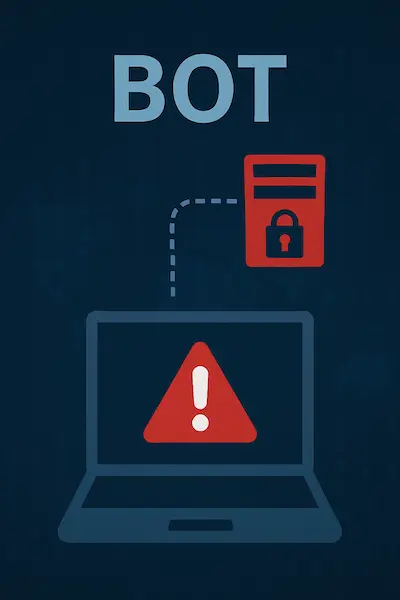
Bots, short for "robots," are automated software applications that perform repetitive tasks. Bots operate faster than humans, following specific commands or scripts, and can function independently or in collaboration with other bots. Some bots are beneficial, such as search engine bots that index web pages or customer service bots that provide instant responses. However, malicious bots are also used in cybercrime, from spreading malware to gathering data without consent.
Key Characteristics of Bots:
- Automation: Bots function automatically without human intervention.
- Script-Based: They follow a predetermined set of commands.
- Purpose-Driven: Bots can be designed for helpful or malicious purposes.
How Do Bots Get Created?
Bots are typically created using programming languages like Python, JavaScript, or specialized scripting tools. Malicious bots often have complex designs, allowing them to:
- Evade Detection: Using tactics to avoid detection by security software.
- Propagate Quickly: Spreading from one system to another, infecting multiple devices.
- Execute Tasks Efficiently: Bots are optimized to complete tasks repeatedly, making them ideal for tasks such as data scraping or account creation.
To create a bot, cybercriminals develop code that specifies its behavior, goals, and triggers. Then, any form of malware delivery can be used to bring the programming onto a computer. The bot can be deployed over the internet, infecting systems through techniques like phishing emails, compromised websites, or malicious downloads. In addition, it could be brought by a network worm that deposits its payload. It could also be a Trojan horse disguised as a program the target user desired.
After implantation, the bot then attempts to connect with the command-and-control server (as stated above, usually an IRC server). From there, the bot herder can launch any number of attacks.
What is a Botnet?
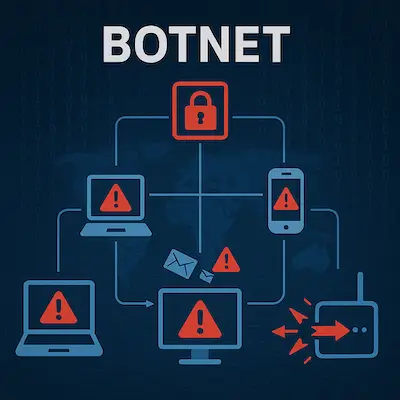
A botnet is a network of multiple infected devices, or bots, working together under a single command and control (C&C) center. This network is usually created by infecting devices with malware that connects them to the botnet, making them "zombie" devices controlled remotely by a cybercriminal, also known as a "bot herder."
Botnets allow attackers to amass significant computing power, enabling large-scale attacks that a single bot could not achieve. These networks are used in a wide range of attacks, including Distributed Denial of Service (DDoS) attacks, credential stuffing, and spamming.
Difference Between Bots and Botnets
While the terms "bot" and "botnet" are sometimes used interchangeably, they represent different concepts:
| Bot | Botnet | |
|---|---|---|
| Definition | An automated software application that performs specific tasks. | A network of infected devices controlled by a single source. |
| Function | Operates independently to complete tasks. | Functions as a part of a network to amplify attack power. |
| Control Mechanism | Usually programmed to perform individual actions. | Controlled through a C&C server by an attacker. |
| Example Usage | Web crawling, auto-replies, data scraping. | DDoS attacks, credential stuffing, spam campaigns. |
Types of Attacks Made by Bots and Botnets
Bots and botnets can be employed in various types of cyber attacks, each designed to disrupt, damage, or gain unauthorized access to systems. Here are some of the most common:
1. Distributed Denial of Service (DDoS) Attacks
In a Distributed Denial of Service (DDoS) attack, a botnet floods a target server or network with an overwhelming volume of traffic, causing it to slow down or crash. This influx of requests, often originating from thousands of infected devices worldwide, exhausts the server’s resources and bandwidth, making the service inaccessible to legitimate users. DDoS attacks are commonly used to disrupt businesses, government websites, and other online services, often causing significant financial losses.
2. Credential Stuffing and Brute Force Attacks
Bots are commonly used in credential stuffing attacks, where stolen login credentials are tested across multiple websites to gain unauthorized access. This process relies on the assumption that people reuse passwords across different sites, making it easier for bots to break in. In brute force attacks, bots attempt thousands of possible combinations of usernames and passwords, a tactic that becomes increasingly effective when bots can test combinations at a rapid pace.
3. Data Theft and Scraping
Bots used for data theft and scraping gather large amounts of data from websites, which may include personal information, proprietary content, or pricing data. This stolen data is often sold on the dark web, used for competitive intelligence, or leveraged to launch further attacks. Scraping is especially problematic for businesses, as it can violate their data privacy policies and compromise their unique content or competitive advantage.
4. Spamming and Phishing
Botnets (or Spambots in this case) are frequently employed to send massive amounts of spam emails, clogging up inboxes and often containing phishing links that lead to malware or fraudulent websites. These spam messages are designed to look legitimate, tricking recipients into clicking links or providing personal information. Often, these are emails that contain advertisements for questionable products (pornography, black market pharmaceuticals, fake antivirus software, counterfeit goods) or contain computer viruses themselves. By using bots, attackers can scale up phishing campaigns, reaching thousands of victims in a short time, increasing their chances of success. A spammer will usually purchase a botnet from a bot herder in order to use the infected computers to send out the spam emails, concealing where the attacks are actually originating.
5. Click Fraud
In click fraud attacks, bots simulate human clicks on online advertisements, generating fake revenue for malicious advertisers or draining advertising budgets for competitors. Each bot in a botnet can click on ads hundreds of times, creating the illusion of genuine engagement. This fraudulent activity harms both advertisers and legitimate publishers, as it skews performance metrics and leads to financial losses without any real audience engagement.
Prevention: Protecting Against Bots and Botnets
Preventing attacks by bots and botnets requires a combination of technology, awareness, and vigilance. Here are some practical steps to strengthen defenses against these threats:
1. Use Firewalls and Intrusion Detection Systems
Firewalls and intrusion detection systems monitor traffic and identify unusual patterns, helping to block malicious bots before they enter a network.
2. Implement Multi-Factor Authentication (MFA)
MFA adds an extra layer of security, making it more difficult for bots to access accounts, even if they possess the correct credentials.
3. Keep Software and Systems Updated
Regularly updating systems and applying patches closes vulnerabilities that bots exploit to gain access.
4. Install and Update Antivirus/Security Software
Antivirus and security software provide real-time protection, detecting and removing bots before they can infect the device. Many advanced antivirus programs also offer behavioral analysis to identify suspicious actions, even if they don't match known threats.
5. Monitor Network Traffic
By analyzing network traffic for irregularities, such as sudden spikes in requests or data transfers, organizations can spot potential botnet activity.
6. Educate Users on Phishing and Malicious Links
Many bot infections begin with a phishing email. Training users to recognize phishing attempts and avoid clicking on suspicious links is crucial.
7. Deploy CAPTCHA Systems
CAPTCHAs can help to differentiate between human users and bots, reducing the effectiveness of bots attempting to access websites or complete forms.
8. Use Bot Management Solutions
Specialized security solutions designed to detect and block bot activity can provide additional protection, especially for organizations with high web traffic.
How Antivirus and Security Software Protects Against Bots
Antivirus and security software is indeed essential when discussing protection against bots and botnets. Security software is one of the foundational defenses against these threats, as it provides real-time monitoring, malware detection, and removal, which can stop infections before they spread.
Here's how antivirus and security software specifically help in protecting against bots and botnets:
- Malware Detection and Removal: Antivirus programs can identify malicious bots attempting to infiltrate a device and remove them before they become active.
- Real-Time Monitoring: Security software often includes real-time monitoring that alerts users to suspicious activities, such as unusual data transfers or attempts to connect to unknown servers—signs that a device might be part of a botnet.
- Behavioral Analysis: Advanced security software uses behavioral analysis to detect anomalous actions that may indicate bot activity, even if the malware is new or unrecognized.
- Automated Updates: Antivirus software regularly updates its databases with the latest threat signatures, which is critical because bot creators continually develop new methods to evade detection.
Well-Known Bots and Botnets
Over the years, several botnets have gained notoriety for the scale, sophistication, and damage of their attacks. Here are three infamous bots or botnets that have highlighted the dangers of botnet-driven cybercrime:
Mirai Botnet
The Mirai botnet emerged in 2016 and is infamous for targeting Internet of Things (IoT) devices, such as routers, cameras, and smart home appliances. It spread by exploiting weak or default passwords on these devices, creating a massive botnet that launched some of the largest Distributed Denial of Service (DDoS) attacks in history. Mirai’s attacks took down major websites and services, including Twitter, Netflix, and Reddit, underscoring the security vulnerabilities within IoT devices and prompting greater awareness of default password risks.
Zeus Botnet
Zeus Botnet, also known as Zbot, is a sophisticated botnet known primarily for banking fraud. First identified in 2007, Zeus steals financial data and login credentials through keylogging and form grabbing, allowing cybercriminals to access bank accounts and conduct unauthorized transactions. The malware spread through phishing emails and infected millions of devices worldwide, leading to financial losses in the millions and making Zeus one of the most damaging banking trojans of its time.
Emotet Botnet
First detected in 2014, originally developed as a banking trojan, the Emotet botnet evolved into a powerful malware distribution network, distributing malicious software to other botnets. Emotet spread through malicious email attachments, appearing as legitimate invoices, payment notices, or urgent alerts to trick users into opening them. Known for its resilience, Emotet has been taken down and reemerged multiple times, continuing to be a major threat to governments, businesses, and individuals due to its modular structure that allows it to spread ransomware, steal sensitive data, and compromise networks.
These examples demonstrate the wide range of capabilities of botnets, from financial theft and data compromise to large-scale service disruptions. Each of these botnets has influenced cybersecurity practices and highlighted the need for stronger defenses against evolving threats.
Conclusion
Bots and botnets represent both the productive and perilous sides of automation in our digital landscape. While bots can streamline processes, malicious bots and botnets enable a variety of cyber attacks that compromise security and privacy. Understanding how bots operate, the risks associated with botnets, and implementing strong preventive measures are crucial steps in defending against these automated threats. With vigilance and proper cybersecurity practices, individuals and organizations can mitigate the risks associated with bots and botnets, contributing to a safer digital environment.