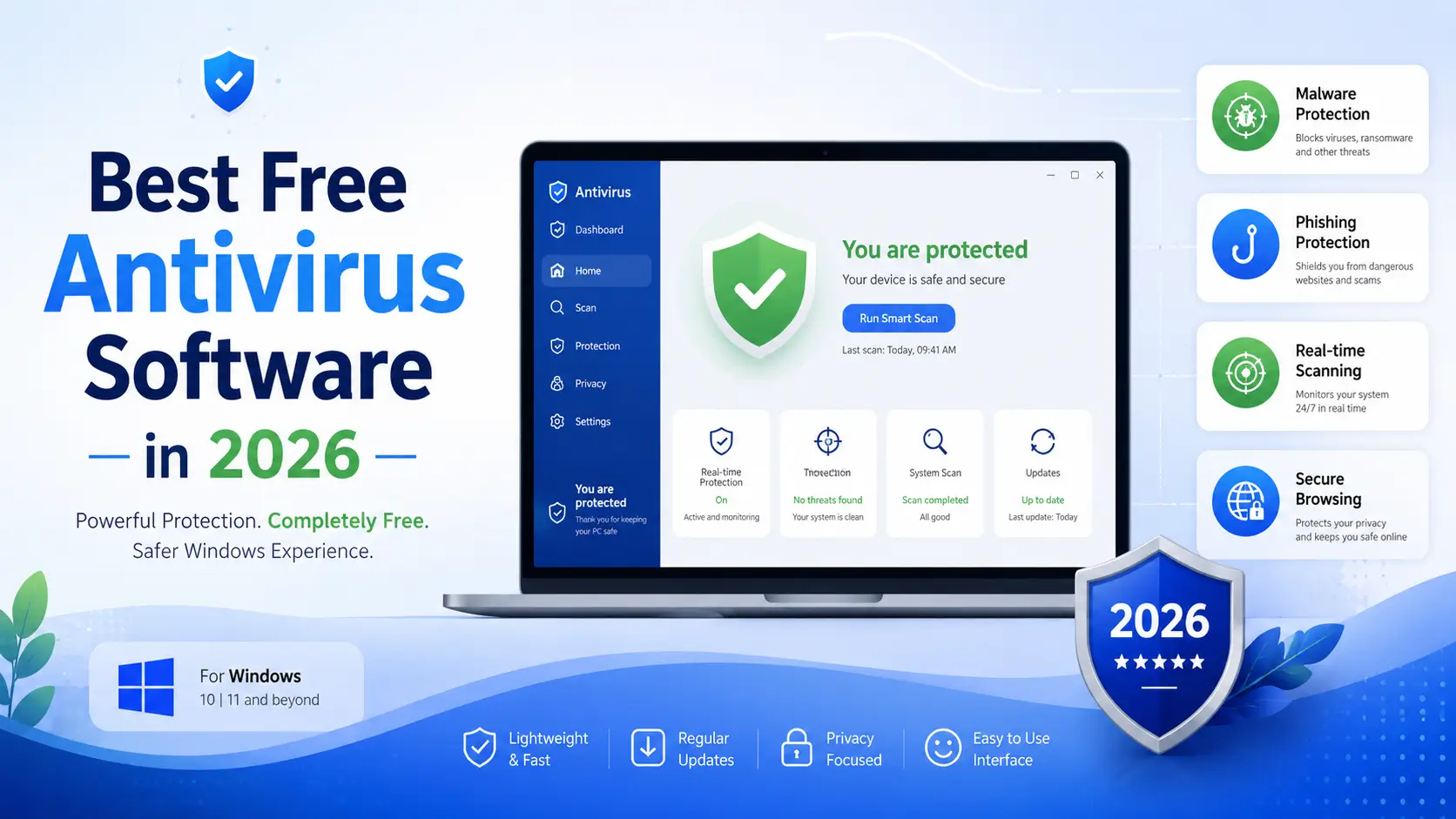
Free antivirus still matters in 2026. Many people want solid protection without paying for another subscription every year. That is why the search for the best free antivirus software remains so popular.
Windows users already start with one major advantage. Windows 11 includes Microsoft Defender Antivirus through the built-in Windows Security app, so basic real-time protection is already there from the start. At the same time, well-known brands such as Avast and Bitdefender still offer free antivirus products for home users. That gives people real choice, but it also makes the decision less obvious.
Not all free antivirus tools offer the same value. Some focus on simple, built-in protection. Others try to stand out with extra features, scam defense, or a lighter system footprint. Independent testing also helps separate marketing claims from real performance. AV-TEST’s April 2026 Windows 11 evaluations continue to compare major antivirus products in areas such as protection, performance, and usability.
In this guide, we compare five popular free antivirus options for Windows in 2026. We look at protection, ease of use, system impact, and the limits of each free version, so readers can choose the option that fits them best.
Table of Contents
What to Look for in the Best Free Antivirus Software
Choosing the best free antivirus software is not just about picking the biggest brand name. In 2026, many Windows users already have Microsoft Defender Antivirus built into Windows 11, so any third-party free antivirus needs to offer clear value beyond what the operating system already includes. Microsoft says Windows 11 comes with real-time antivirus protection through Windows Security, along with built-in tools such as Firewall and Smart App Control.
That is why this comparison should focus on practical value, not just feature lists. A good free antivirus should offer strong malware protection, real-time defense, and a setup process that feels easy from the start. It should also avoid slowing down the computer too much during normal use. For many people, phishing and scam protection now matter just as much as classic virus detection, since many threats begin with fake links, fake downloads, or deceptive messages rather than obvious malware files.
Ease of use matters too. Some free antivirus tools feel simple and quiet. Others add dashboards, upgrade prompts, and extra tools that not every user wants. Neither approach is automatically better. The right choice depends on the person using it. A beginner may want a built-in option that stays out of the way. Another user may prefer a product that offers more visible alerts or extra security features.
Independent testing helps make these differences clearer. AV-TEST’s current Windows 11 home-user testing includes major vendors and evaluates them in realistic scenarios using current public versions of their products. That gives readers a more useful picture than marketing claims alone.
In this article, we judge each free antivirus by a few simple standards: protection quality, real-time defense, phishing help, system impact, ease of use, and the limits of the free tier. The goal is not to force one answer on everyone. The goal is to help readers choose the free antivirus that fits their needs best.
How We Chose the Best Free Antivirus Software
Choosing the best free antivirus software takes more than listing familiar brand names. In 2026, most Windows users already have Microsoft Defender Antivirus built into Windows 11. That means a free antivirus needs to offer clear value in everyday use, not just a long feature list. Microsoft says Windows Security includes real-time protection through Microsoft Defender Antivirus, along with other built-in tools such as Firewall and Smart App Control.
We looked at a few simple standards. The first was protection quality. A free antivirus still needs to catch malware well, since that is the main reason people install it. The second was real-time defense. Good protection should work in the background, not just during manual scans. The third was system impact. Many people want free antivirus because they need basic protection on an everyday laptop or family PC. A heavy tool can become frustrating very quickly.
We also looked at ease of use. Some people want a quiet tool that stays out of the way. Others prefer a dashboard with more alerts and options. Both approaches can work, but they suit different users. We also considered how much pressure each product puts on users to upgrade, since the free version should still feel usable on its own.
To keep the comparison grounded, we relied on current vendor pages and independent lab testing. AV-TEST’s April 2026 Windows 11 results include Avast Free Antivirus, AVG AntiVirus Free, Microsoft, and other major vendors, with scores for protection, performance, and usability. Avast Free Antivirus and AVG AntiVirus Free both scored 6 out of 6 in all three categories in that test. Microsoft also scored 6 out of 6 across all three categories.
Quick Comparison Table: Top Free Antivirus Software in 2026
If you want the short version first, this table gives a quick look at five popular free antivirus options for Windows in 2026.
| Product | Free version available | Best for | Main strengths | Main drawback |
|---|---|---|---|---|
| Microsoft Defender | Yes, built into Windows 11 | Users who want built-in protection | Already installed, simple setup, real-time protection | Fewer bonus tools |
| Avast Free Antivirus | Yes | Users who want extra features | Strong free feature set, scam-focused tools, familiar brand | More upgrade prompts |
| AVG AntiVirus Free | Yes | Users who want a familiar option | Straightforward interface, solid core protection | Advanced tools stay in paid plans |
| Avira Free Security | Yes | Users who want security plus utilities | Broader set of free tools, all-in-one feel | Interface can feel busier |
| Bitdefender Antivirus Free | Yes | Users who want lightweight protection | Simple, quiet, light on system resources | Fewer extras in the free tier |
This list makes sense for 2026 because each product still has a real place in the free antivirus market:
- Microsoft Defender remains the built-in baseline for Windows 11 users.
- Avast continues to offer a free antivirus download and promotes scam protection through its free app.
- AVG still markets free antivirus and malware protection.
- Avira offers both Free Antivirus and Free Security.
- Bitdefender still offers a free Windows antivirus product and describes it as quick to install and light on computer resources.
Microsoft Defender: Best Built-In Free Antivirus for Most Windows Users

Microsoft Defender is the default antivirus for most Windows users in 2026. It comes built into Windows 11, so there is nothing extra to install before basic protection starts working. That makes it one of the most practical free antivirus choices for home users. It runs through the Windows Security app and gives users a simple way to manage core security settings. Microsoft says Windows Security includes Microsoft Defender Antivirus along with Windows Firewall and Smart App Control.
Its biggest strength is convenience. Many people do not want another security app with extra dashboards, bundled features, or constant upgrade prompts. They want protection that works quietly in the background. Defender fits that role well. It makes the most sense for beginners, students, casual home users, and anyone who prefers a built-in option.
Defender also matters because it sets the baseline. Every third-party free antivirus in this roundup needs to show why a Windows user should install something else instead of staying with the protection that already comes with the operating system.
For many users, the main drawback is that Defender can feel basic. People who want more visible scam warnings, extra tools, or a different interface may prefer a third-party option. Even so, it remains a serious free choice. AV-TEST’s April 2026 Windows 11 results gave Microsoft full 6 out of 6 scores for protection, performance, and usability.
Avast Free Antivirus: Best Free Antivirus for Extra Features
Avast Free Antivirus stands out because it offers more than bare-bones antivirus. On its current free pages, Avast promotes free antivirus, online scam prote ction, and a broader all-in-one experience through the Avast One app. That gives it a different feel from lighter or more minimal options.
That broader approach works well for users who want more visible security tools. Some people like a product that feels active and feature-rich. They want a security app that does more than scan for malware in the background. Avast fits that type of user better than a quiet built-in option.
Its downside is easy to understand too. The interface can feel busier, and some users may notice more upgrade pressure than they would with simpler tools. That does not make it a weak free product, but it does make it a better fit for people who do not mind a more feature-forward design.
Independent testing also supports Avast’s position in this roundup. AV-TEST’s April 2026 Windows 11 results gave Avast Free Antivirus 6 out of 6 for protection, 6 out of 6 for performance, and 6 out of 6 for usability. AV-Comparatives’ 2025 consumer summary report also lists Avast among its Top-Rated products.
AVG AntiVirus Free: Best Free Antivirus for Simplicity and Familiarity

AVG remains one of the most familiar names in free antivirus. Many users have seen it for years, and that matters more than have seen it for years, and that matters more than it may seem. A recognizable product with a straightforward setup can feel less intimidating than a crowded security suite. AVG still promotes free antivirus and malware protection on its official site, which keeps it firmly in the free antivirus conversation for 2026.
AVG works best for users who want a classic free antivirus experience. It suits people who want core protection, a familiar name, and a tool that feels direct rather than overloaded. That makes it a good fit for home users who want something simple but still established.
users who want something simple but still established.
The main tradeoff is that the free version focuses on essentials. Users who want broader privacy tools or more premium-style features will run into the limits of the free tier sooner. For some people, that is fine. They only want the basics anyway.
Recent testing supports AVG’s place in this list. AV-TEST’s April 2026 Windows 11 results gave AVG AntiVirus Free full 6 out of 6 scores for protection, performance, and usability. AV-Comparatives’ 2025 consumer summary report also names AVG as a Top-Rated product also names AVG as a Top-Rated product.
Avira Free Security: Best Free Antivirus for Users Who Want Extra Utility Tools

Avira takes a broader approach than a plain antivirus-only product. Its official pages highlight both Avira Free Antivirus and Avira Free Security, with messaging that covers malware protection, scam protection, privacy, and extra utility features. That makes Avira appealing to users who like an all-in-one security dashboard rather than a simple scanner.
That wider toolset is Avira’s main strength. Some users want more than malware scanning. They like having several protection and cleanup tools in one place. Avira fits that style well, especially for people who prefer one app that tries to cover several needs.
The tradeoff is that broader dashboards can feel busier. Users who want the simplest possible experience may prefer Defender or Bitdefender instead. Avira makes more sense for people who see extra tools as a benefit, not a distraction.
In current lab testing, Avira remains a credible choice. AV-TEST’s April 2026 Windows 11 results list Avira Internet Security for Windows and give it 6 out of 6 for protection, 5.5 out of 6 for performance, and 6 out of 6 for usability. That is still strong overall, though not as light in that test as some of the other products in this roundup.
Bitdefender Antivirus Free: Best Lightweight Free Antivirus

Bitdefender Antivirus Free is the strongest fit for users who want a quieter, lighter antivirus. Its official free antivirus page says the product is designed for Windows PCs, is quick to install, and stays light on computer resources. Bitdefender also says it is suitable for gaming, image and video editing, and other resource-intensive tasks.
That makes Bitdefender especially appealing for older laptops, low-power systems, and users who dislike clutter. Some people do not want lots of extra pop-ups or bundled tools. They want something that protects the system and stays out of the way. Bitdefender’s free version matches that preference well.
Its weakness is also clear. Users who want many extra features may find it too minimal. Bitdefender Free focuses on essentials, not on giving users a broad security suite at no cost.
Even so, it has a strong case in this list. AV-TEST’s April 2026 Windows 11 results gave Bitdefender 6 out of 6 for protection, 6 out of 6 for performance, and 6 out of 6 for usability for its tested Windows product. AV-Comparatives’ 2025 consumer summary report also lists Bitdefender among its Top-Rated products.
Free Antivirus vs. Microsoft Defender: Do You Need a Third-Party Tool?
For many people, Microsoft Defender is enough. It already comes with Windows 11, it offers real-time protection, and it works through the built-in Windows Security app. Users who browse carefully, keep Windows updated, and avoid risky downloads may never feel a strong need to install another antivirus. Microsoft’s own Windows Security pages present Defender as part of the built-in security baseline for Windows users.
A third-party free antivirus can still make sense, though. Some users want a different interface. Others want extra scam warnings, a more visible dashboard, or a lighter product that feels different from the Windows default. Households with less technical users may also prefer a tool that surfaces alerts more clearly or bundles extra protections in one place.
The real answer depends on the user. Defender gives Windows users a solid baseline at no extra cost. Third-party free antivirus tools try to improve on that baseline in different ways. Avast leans into extra features. Bitdefender leans into light system impact. Avira leans into a broader utility bundle. AVG leans into familiarity and simplicity.
So, do you need a third-party tool? Not always. But you may still want one if it better matches how you use your PC.
What Free Antivirus Usually Does Not Include
Free antivirus can work well, but it usually focuses on the essentials. That means users should not expect every premium feature at no cost. In many cases, the free version covers malware scanning, real-time protection, and some web or scam defense, but leaves broader tools for paid plans.
Common limits include fewer privacy features, fewer identity tools, less support, and fewer advanced protections. Vendors often reserve extras such as VPN access, premium support, full cleanup tools, password managers, or broader security suites for paid products. Avast’s product pages, for example, promote a wider lineup that goes beyond the basic free experience. Bitdefender also separates its free antivirus from its broader paid packages.
That does not make free antivirus a bad choice. It just means users should keep their expectations realistic. If you want straightforward protection for normal home use, free antivirus may be enough. If you want identity monitoring, a full VPN, or more advanced support, you will usually need a paid plan.
Looking for a full-featured antivirus?
Free antivirus can cover the basics, but it often leaves out advanced tools such as enhanced ransomware protection, privacy features, identity monitoring, and premium support.
If you want broader protection, explore our guide to antivirus security software to compare fuller-featured options.
How to Choose the Right Free Antivirus for Your Needs
The best free antivirus depends on what matters most to you. If you want the simplest path, Microsoft Defender makes the most sense. It is already built into Windows 11, and it covers the basics without extra setup.
If you want a quiet product with low system impact, Bitdefender Antivirus Free stands out. It suits people who care about speed, older hardware, or a cleaner experience. If you want extra features and more visible security tools, Avast Free Antivirus is the stronger fit. If you like a broader bundle of tools, Avira Free Security makes more sense.
For users who want something familiar and straightforward, AVG AntiVirus Free remains a solid option. It does not try to reinvent the category, and that is part of its appeal.
The easiest way to choose is to think about your habits. Do you want built-in and simple? Go with Defender. Do you want lightweight and quiet? Try Bitdefender. Do you want more tools? Look at Avast or Avira. Do you want a familiar classic free antivirus? AVG is still a strong fit.
Is Free Antivirus Enough in 2026?
For many people, yes. Free antivirus can still be enough in 2026 if you browse normally, keep Windows updated, use multifactor authentication where possible, and avoid risky downloads. Antivirus is one layer of protection, not the whole answer, but it remains an important layer. For basic home use, the free options in this roundup can provide meaningful protection without adding another subscription. Microsoft says Windows 11 already includes built-in real-time antivirus protection through Windows Security.
Free antivirus may not be enough for everyone, though. Paid protection can make more sense for shared family computers, heavy downloaders, frequent online shoppers, or users who want identity features, premium support, or a built-in VPN. The more complex your needs become, the more likely you are to outgrow a free product.
The good news is that many users do not need the extra layers right away. A solid free antivirus, good updates, safer browsing habits, and strong passwords can go a long way.
Frequently Asked Questions
What is the best free antivirus software in 2026?
There is no perfect answer for everyone. Microsoft Defender is the strongest built-in option for most Windows users. Bitdefender Antivirus Free is a strong choice for people who want a lightweight app. Avast Free Antivirus fits users who want more features, while AVG AntiVirus Free remains a familiar and straightforward option.
Is Microsoft Defender good enough?
For many home users, yes. It comes built into Windows 11, provides real-time antivirus protection, and performs well in current AV-TEST results. It makes the most sense for people who want a simple default option and already practice safe habits online.
Which free antivirus is lightest on system resources?
Bitdefender Antivirus Free has the clearest lightweight positioning on its official page. Microsoft Defender also works well for users who want a built-in solution without another large app layer. Bitdefender says its free antivirus is quick to install and light on computer resources.
Is free antivirus safe to use?
Yes, if you choose a well-known vendor and download the product from the official website. The safer route is to stick with recognized brands such as Microsoft, Avast, AVG, Avira, or Bitdefender and avoid random download portals.
Do I need antivirus on Windows 11?
Yes, but Windows 11 already includes antivirus through Microsoft Defender Antivirus in the Windows Security app. That means you start with protection already in place, even if you never install a third-party product.
At The End: The Best Free Antivirus Software for Different Users
The best free antivirus software in 2026 depends on what kind of user you are.
If you want the easiest built-in choice, Microsoft Defender is the clear answer. It is already part of Windows 11, and it gives most people a strong baseline with no extra work.
If you want the lightest feel, Bitdefender Antivirus Free is the better fit. It focuses on essentials and aims to stay light on system resources. If you want more visible features and a broader free experience, Avast Free Antivirus stands out. But, if you want something familiar and straightforward, AVG AntiVirus Free still deserves a place on the shortlist. If you prefer a wider tool bundle, Avira Free Security is the better match.
The main takeaway is simple: the best free antivirus is the one that matches your habits and stays active on your device. Some people want built-in and quiet. Others want more tools or a different interface. In 2026, there is still no single free ativirus that fits everyone, but there are several strong options for Windows users who want solid protection at no cost.
References
The information in this article is based on official product pages and independent antivirus testing sources. These references help support the product comparisons, feature descriptions, and current Windows antivirus test results mentioned throughout the post.
- Microsoft Windows Security: https://www.microsoft.com/en-ca/windows/comprehensive-security
- Microsoft Support, Windows Security app: https://support.microsoft.com/en-us/windows/security/windows-security/stay-protected-with-the-windows-security-app
- AV-TEST, Antivirus for Windows home users: https://www.av-test.org/en/antivirus/home-windows/
- AV-Comparatives, Summary Report 2025: https://www.av-comparatives.org/tests/summary-report-2025/
- Avast Free Antivirus: https://www.avast.com/en-us/free-antivirus-download
- Avast homepage: https://www.avast.com/
- AVG Free Antivirus: https://www.avg.com/
- Avira Free Security: https://www.avira.com/
- Bitdefender Antivirus Free: https://www.bitdefender.com/en-us/consumer/free-antivirus