Best Small Business Antivirus Software
How to Choose Reliable Protection for Your Company
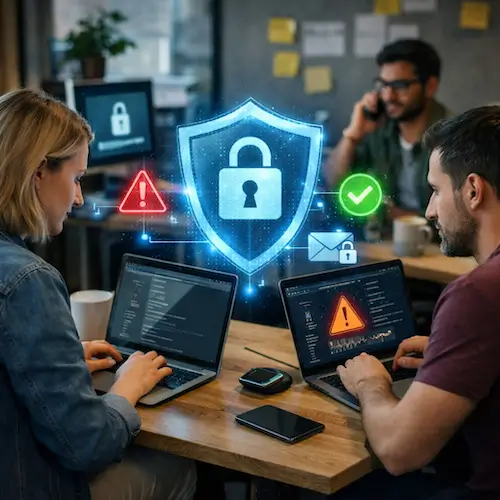
Small businesses are no longer “too small” to be targeted. In fact, companies with fewer employees are often seen as easier entry points for ransomware, phishing, and data theft. Many don’t have a full-time IT team, which makes strong, reliable antivirus protection one of the most important security investments you can make.
But choosing the right solution isn’t just about installing basic antivirus software. Today’s threats require real-time protection, ransomware defense, phishing prevention, and centralized device management. If your team works remotely, uses cloud apps, or handles customer data, your attack surface is already larger than you think.
This guide breaks down what small businesses actually need, how to evaluate security tools, and which trusted brands offer solutions built specifically for smaller teams. Whether you’re a solo founder, a growing startup, or managing 20+ employees, the goal is simple: protect your business without overcomplicating it.
Below, you’ll find practical buying advice and a curated list of small business antivirus solutions from established cybersecurity companies. Use it to compare features, understand trade-offs, and choose a solution that fits both your current setup and your future growth.
Why Small Businesses Are Targeted More Than Ever
Small businesses face a growing number of cyber threats, and the reasons are practical, not personal. Attackers look for opportunity, weak defenses, and fast payouts. For many companies with limited IT resources, that combination makes them attractive targets.
Cybercriminals Look for Easy Entry Points
Attackers are not only chasing large corporations. In many cases, small businesses are more attractive targets because they often lack dedicated security teams, formal security policies, and continuous monitoring tools. A company with 10 employees may store payment information, contracts, and customer records, yet operate without structured endpoint protection across every device.

Ransomware Has Become a Business Model
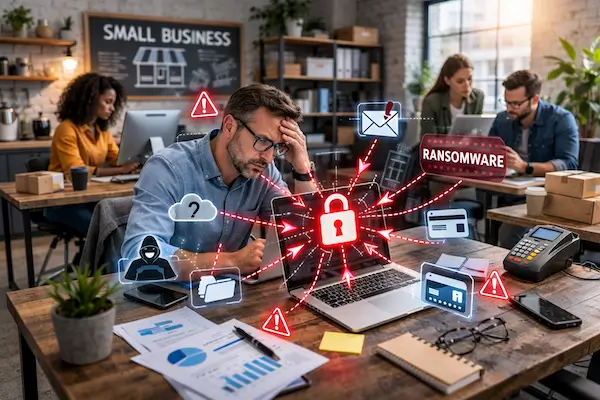
Ransomware is no longer run by isolated hackers. It operates as a scalable underground industry. With ready-made attack kits available, criminals can launch campaigns against hundreds of small businesses at once. Even a single infected device can encrypt shared drives, cloud-synced folders, and connected backups, leading to downtime and financial loss that many smaller organizations struggle to absorb.
Remote Work Expands the Attack Surface
Remote and hybrid work environments increase exposure. Employees connect from home networks, use laptops outside the office, and rely heavily on cloud applications. Without centralized antivirus management and consistent security policies, one compromised device can provide access to the wider business network.
Phishing and Email Attacks Are Highly Effective
Phishing remains one of the most successful attack methods because it targets people instead of systems. A convincing message that imitates a vendor invoice or a login alert can trick even experienced employees. Once credentials are stolen, attackers may quickly access email accounts, accounting platforms, or internal systems.
Small Businesses Are Part of Larger Supply Chains
Many small companies work closely with larger partners and vendors. This makes them potential entry points in supply chain attacks. Criminals may compromise a smaller organization to gain indirect access to bigger targets. That means even a small team must maintain strong endpoint security to protect not only itself but also its business relationships.
The reality is simple: size does not reduce risk. Visibility, access to valuable data, and weak protection increase it. Reliable small business antivirus software forms a critical first layer of defense against these evolving threats.
What Small Businesses Actually Need
Buying antivirus for a small business is not about picking the most popular brand. It is about covering real-world risks without creating unnecessary complexity. The right solution should protect every device, reduce the chance of human error, and give you visibility into what is happening across your network.
Endpoint Protection for All Devices
Every laptop, desktop, and company-issued mobile device should have real-time protection. Modern threats move quickly, so relying only on traditional signature-based scanning is not enough. Look for solutions that include behavioral detection, exploit prevention, and protection for both Windows and macOS systems. If employees use mobile devices for work, mobile security support is a strong advantage.
Ransomware Protection and Remediation
Ransomware remains one of the biggest financial risks to small businesses. A strong solution should monitor suspicious encryption behavior, block unauthorized file changes, and ideally offer rollback or remediation features. The goal is not only to detect threats but to limit damage if something slips through.
Centralized Management
As soon as you have more than a few devices, manual management becomes inefficient. A cloud-based admin console allows you to see device status, apply security policies, push updates, and respond to threats from one dashboard. This is one of the main differences between consumer antivirus and business-grade protection.
Phishing and Web Protection
Email and web browsing are still the most common attack vectors. Effective small business antivirus software should include anti-phishing tools, malicious website blocking, and web filtering. These features reduce the chance that an employee clicks on a harmful link or downloads an infected file.
Identity and Account Protection
Many attacks now focus on stealing login credentials rather than installing malware. Features such as dark web monitoring, password management, and integration with multi-factor authentication add another layer of defense. Even if these tools are optional, they strengthen your overall security posture.
Scalability and Flexible Licensing
Your security solution should grow with your business. Adding or removing devices should be simple, and billing should be predictable. Whether you start with five users or twenty, the platform should support expansion without requiring a complete migration later.
In short: small businesses need more than basic antivirus. They need layered protection, centralized oversight, and tools that reduce risk without overwhelming day-to-day operations.
How to Choose the Right Small Business Antivirus
Not every small business needs the same level of protection. A solo consultant working from one laptop has different risks than a 25-person company handling customer payment data. The key is to match your security tools to your size, workflow, and exposure level, without paying for features you will never use.

For Solo Founders and Home Offices (1–5 Devices)
If you run a small operation with only a handful of devices, focus on strong core protection with minimal management overhead. Look for real-time malware detection, ransomware protection, and phishing defense. A lightweight solution with simple setup is usually enough, especially if you do not manage multiple user accounts or shared systems.
For Growing Teams (5–25 Employees)
Once you have several employees, centralized management becomes essential. You should be able to view device status, enforce policies, and respond to threats from a single dashboard. At this stage, ransomware monitoring, web protection, and device compliance tracking are no longer optional. One infected device can quickly impact the entire team.
For Larger Small Businesses (25+ Users)
As your company grows, your risk profile changes. You may store more customer data, process online payments, or manage sensitive internal documents. Consider solutions that include advanced threat detection, endpoint detection and response (EDR) capabilities, and more detailed reporting. These features provide greater visibility into suspicious activity and help contain incidents faster.
Evaluate Ease of Deployment
Time matters. Choose a solution that allows fast deployment across devices, ideally through a cloud-based console. Remote installation, automatic updates, and clear onboarding steps will reduce setup friction and help ensure every device is protected from day one.
Consider Total Cost, Not Just Price Per Device
The cheapest option is not always the most cost-effective. Downtime, data loss, and reputational damage can far exceed the price of a solid security platform. Compare licensing flexibility, included features, and long-term scalability. Investing in the right protection early is usually far less expensive than recovering from a breach.
Ultimately, the right small business antivirus solution is the one that fits your current operations while giving you room to grow. Start with your real risks, identify the features that address them, and choose a provider that balances protection, usability, and cost.
Best Small Business Antivirus Solutions
Several established cybersecurity companies offer products specifically designed for small businesses. These solutions go beyond basic consumer antivirus by including centralized management, stronger ransomware protection, and scalable licensing. Below is an overview of trusted vendors that provide dedicated small business security options.
Avast Small Business Antivirus

Avast Home Office and Avast Small Business plans are designed for freelancers and growing teams. Avast is known for user-friendly deployment and solid malware detection. Business tiers include centralized management, ransomware protection, and email security features, making it a practical choice for micro businesses and companies that want straightforward protection without complex setup.
Bitdefender Small Business Security

Bitdefender Small Business Security offers advanced threat defense tools typically found in enterprise environments. It combines strong malware detection, ransomware remediation, web filtering, and centralized control. Businesses comparing plans can review features through the Bitdefender business comparison page. This solution is well-suited for teams that want layered protection and detailed visibility.
ESET Small & Medium Business Security
ESET Small and Medium Business solutions are known for lightweight performance and strong endpoint protection. ESET provides scalable options that support multiple operating systems and remote management. It is often chosen by businesses that want reliable security with minimal system slowdown and flexible configuration.
Malwarebytes for Teams

Malwarebytes Teams focuses on strong malware and ransomware protection with a simple cloud-based management console. Deployment is fast, and the interface is straightforward, which makes it appealing for small teams without dedicated IT staff. It is a practical option for businesses that want effective protection with minimal administrative complexity.
Norton Small Business

Norton Small Business combines device security with additional features such as dark web monitoring and VPN access, depending on the plan. Norton’s brand recognition and simple setup process make it appealing for small companies that want an easy transition from consumer-level protection to business-grade coverage.
Each of these providers offers different tiers and feature sets. The right choice depends on your team size, the number of devices you manage, and how much centralized control you need. Comparing features such as ransomware defense, management dashboards, and scalability will help you select a solution that supports both your current operations and future growth.
Small Business Antivirus Comparison Table
Choosing the right solution becomes easier when you compare core features side by side. The table below highlights key differences that matter most to small businesses: centralized management, ransomware protection, cloud-based control, and ideal team size. Always review the specific plan details on each provider’s website, as features may vary by tier.
| Brand | Best For | Centralized Management | Ransomware Protection | Cloud-Based Console | Ideal Team Size |
|---|---|---|---|---|---|
| Avast | Freelancers & small teams needing simple setup | Yes (Business plans) | Yes | Yes | 1–100+ devices |
| Bitdefender | Growing teams wanting advanced threat defense | Yes | Yes (with remediation tools) | Yes | 3–100 devices |
| ESET | Businesses needing lightweight, scalable protection | Yes | Yes | Yes | 5–100 devices |
| Malwarebytes | Small teams focused on strong anti-malware & easy management | Yes | Yes | Yes | 3–20 devices |
| Norton | Small businesses wanting simple, brand-recognized protection | Limited management features | Yes | Yes | 5–20 devices |
Tip: If you manage more than a few devices, prioritize centralized management and ransomware remediation. These features significantly reduce response time if a threat appears. For very small teams, ease of deployment and predictable pricing may be the deciding factors.
Frequently Asked Questions
Small business owners often have practical concerns about cost, necessity, and how business antivirus differs from consumer products. Below are clear answers to common questions.
Do small businesses really need antivirus if they use Microsoft 365?
Yes. Microsoft 365 includes built-in security features, but it does not replace full endpoint protection on every device. If an employee’s laptop is infected with malware or ransomware, cloud-based tools alone may not stop the damage. A dedicated small business antivirus solution adds real-time monitoring, ransomware blocking, and device-level protection that works alongside your cloud services.
Is free antivirus enough for a small business?
Free antivirus tools are typically designed for personal use. They often lack centralized management, advanced ransomware defense, and business support. While free software may provide basic malware detection, it usually does not offer the visibility and control required to protect multiple devices. For any company handling customer data, payments, or sensitive information, business-grade protection is strongly recommended.
How much should a small business spend on cybersecurity?
Costs vary depending on the number of devices and the level of protection required. Many small business antivirus plans are priced per device, making them predictable and scalable. In most cases, the annual cost per device is modest compared to the financial impact of downtime, data loss, or reputational damage after a breach. The goal is not to overspend, but to invest enough to meaningfully reduce risk.
What is the difference between consumer and business antivirus?
The main difference is management and control. Business antivirus solutions include centralized dashboards, policy enforcement, reporting tools, and easier deployment across multiple users. Consumer products focus on protecting a single device or household. For teams, even small ones, business plans provide better oversight and scalability.
Can antivirus alone fully protect my business?
No single tool guarantees complete protection. Antivirus software is a foundational layer, but it should be combined with strong passwords, multi-factor authentication, regular software updates, and employee awareness training. Security works best as a layered approach, where each measure reduces the chance of a successful attack.
In summary: small businesses need practical, manageable protection that fits their size and risk level. The right antivirus solution is not just software—it is part of a broader strategy to protect your operations, data, and reputation.
Final Thoughts: Protecting Your Business Before It’s Too Late
Cybersecurity is no longer something small businesses can postpone. Attacks are automated, widespread, and often opportunistic. Criminals are not choosing targets based on company size. They are looking for weak protection and easy access.
For most small businesses, a reliable antivirus solution is the first and most important layer of defense. It protects your devices, reduces the risk of ransomware, and gives you visibility into threats before they become business-disrupting incidents. When combined with strong passwords, multi-factor authentication, regular updates, and employee awareness, it significantly lowers your overall risk.
The key is to choose a solution that matches how your company actually operates. Consider how many devices you manage, whether your team works remotely, and how sensitive your data is. Avoid overcomplicating things, but do not settle for bare-minimum protection either.
Prevention is always less expensive than recovery. Downtime, lost customer trust, and potential legal consequences can cost far more than an annual security subscription. Taking action now helps ensure your business remains stable, trusted, and resilient in the face of evolving threats.
Investing in the right small business antivirus software is not just an IT decision. It is a business decision that protects your revenue, reputation, and long-term growth.